Siemens Donates NT$160 Million in Software to NTHU
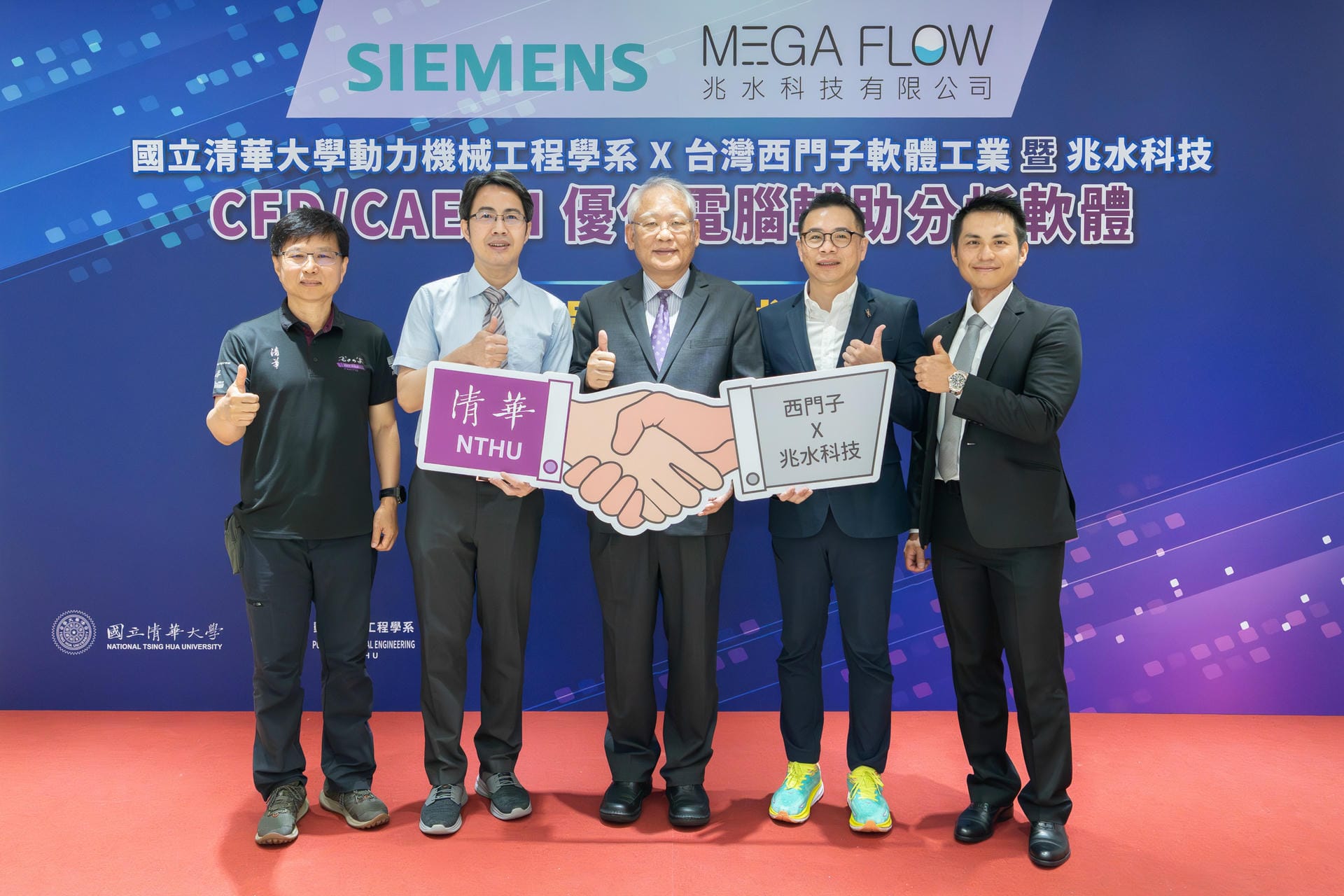
At the donation ceremony for CFD/CAE AI-optimized analysis software (left to right): Department of Power Mechanical Engineering professor Chao-An Lin, Department of Power Mechanical Engineering director Chih-Yung Huang, NTHU Senior Vice President Nyan-Hwa Tai, Siemens Taiwan chairman Howard Chen, and Mega Flow Technology general manager Taylor Lan.
Siemens Digital Industries Software, a global leader in industrial software, has donated AI software worth NT$160 million to the Department of Power Mechanical Engineering at National Tsing Hua University (NTHU) in Taiwan through its Taiwan agent, Mega Flow Technology. The donation includes 480 sets of CFD/CAE AI-optimized software for integrating thermal flow analysis, structural analysis, and AI-driven design optimization technologies to help NTHU stay at the forefront of advanced technologies and train the next generation of AI engineering talent.
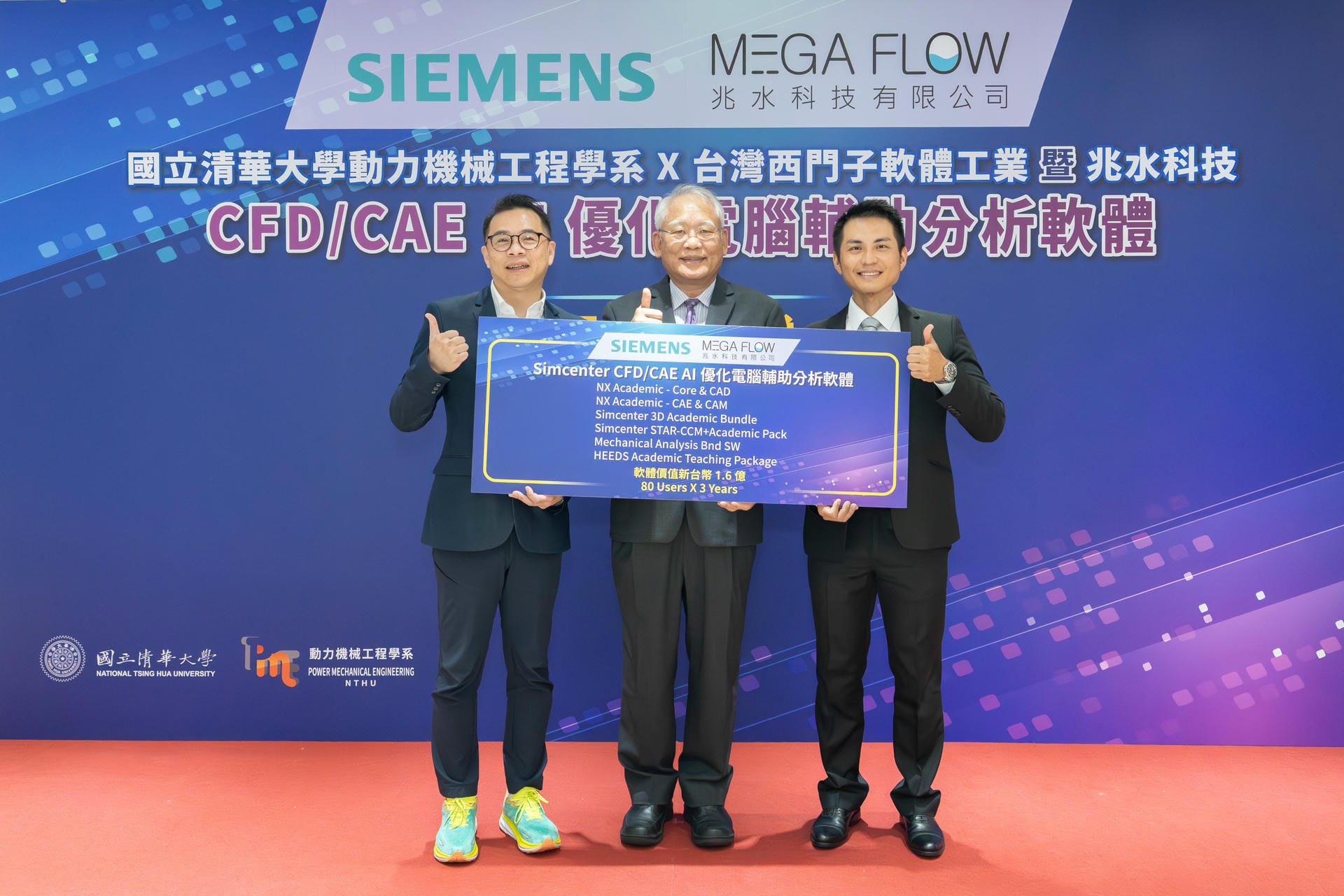
Nyan-Hwa Tai (center) accepting the donation from Howard Chen (left) and Taylor Lan (right).
NTHU Senior Vice President Nyan-Hwa Tai accepted the donation on behalf of the university, thanking Siemens and Mega Flow Technology for their generous support. The donation will strengthen both teaching and research at NTHU, furthering the university's educational mission by helping students become familiar with the software used in industry and by narrowing the gap between learning and practice.
NTHU alumni were instrumental in arranging this major donation. Siemens Taiwan chairman Howard Chen is a graduate of the Department of Chemistry at NTHU, and Mega Flow Technology general manager Taylor Lan completed a master's degree at the Department of Power Mechanical Engineering. The idea for the donation began the moment they discovered that they both graduated from NTHU.
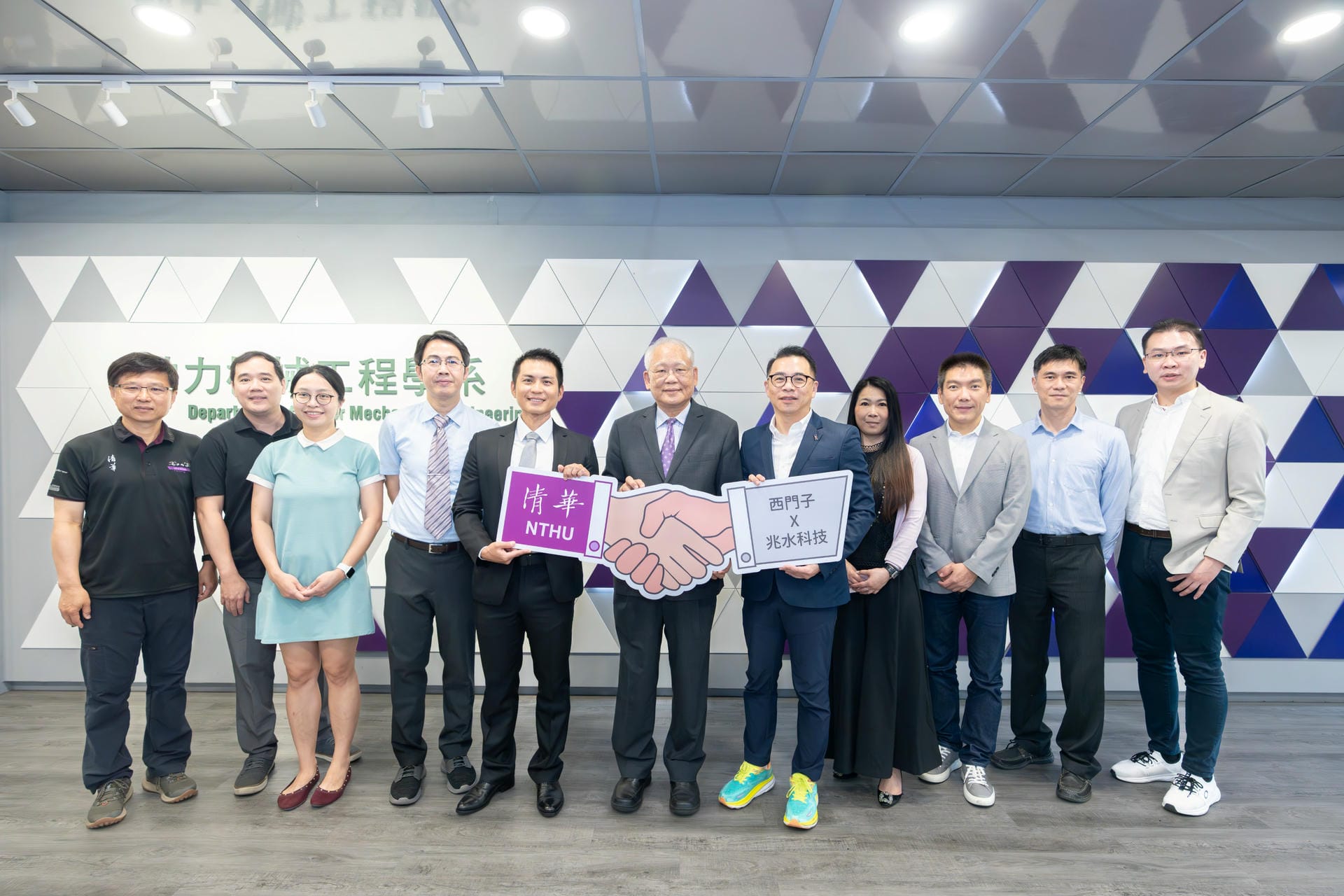
The donated software is valued at NT$160 million and will be used to train the next generation of engineers.
Chen said that talent is the key to technological development, and software and AI are important tools for making use of that talent. He added that the donated software will help students become proficient in the software commonly used in industry and in obtaining certification, so that they can quickly enter the workplace and put their creativity to use.
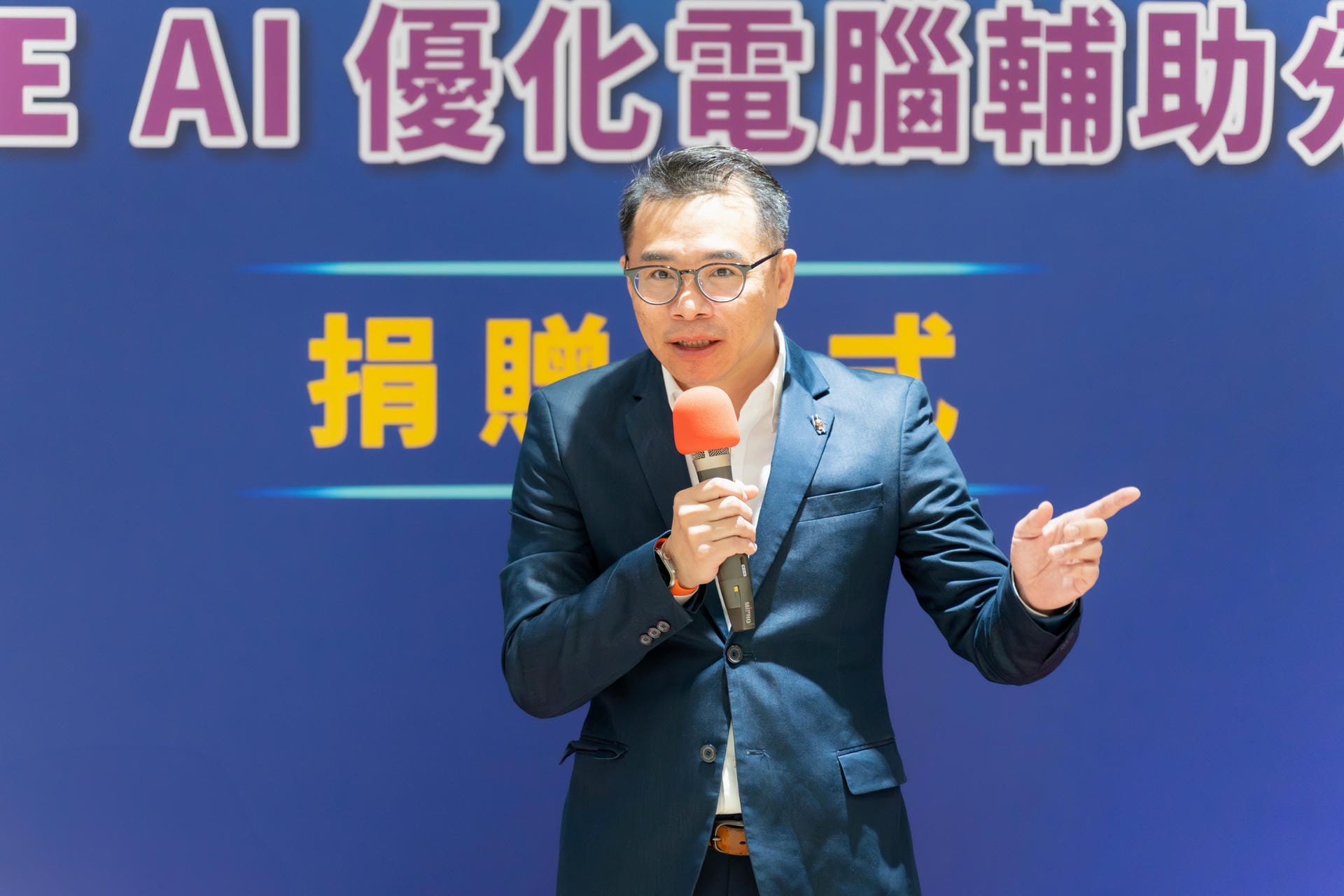
Howard Chen said the software will help students realize their creative potential.
Lan said that his training at NTHU taught him how to analyze problems and come up with solutions. He is the founder of Mega Flow Technology, and most of the company's employees are graduates of the Department of Power Mechanical Engineering. He has found that the best results come from the combination of talented employees and first-class software.
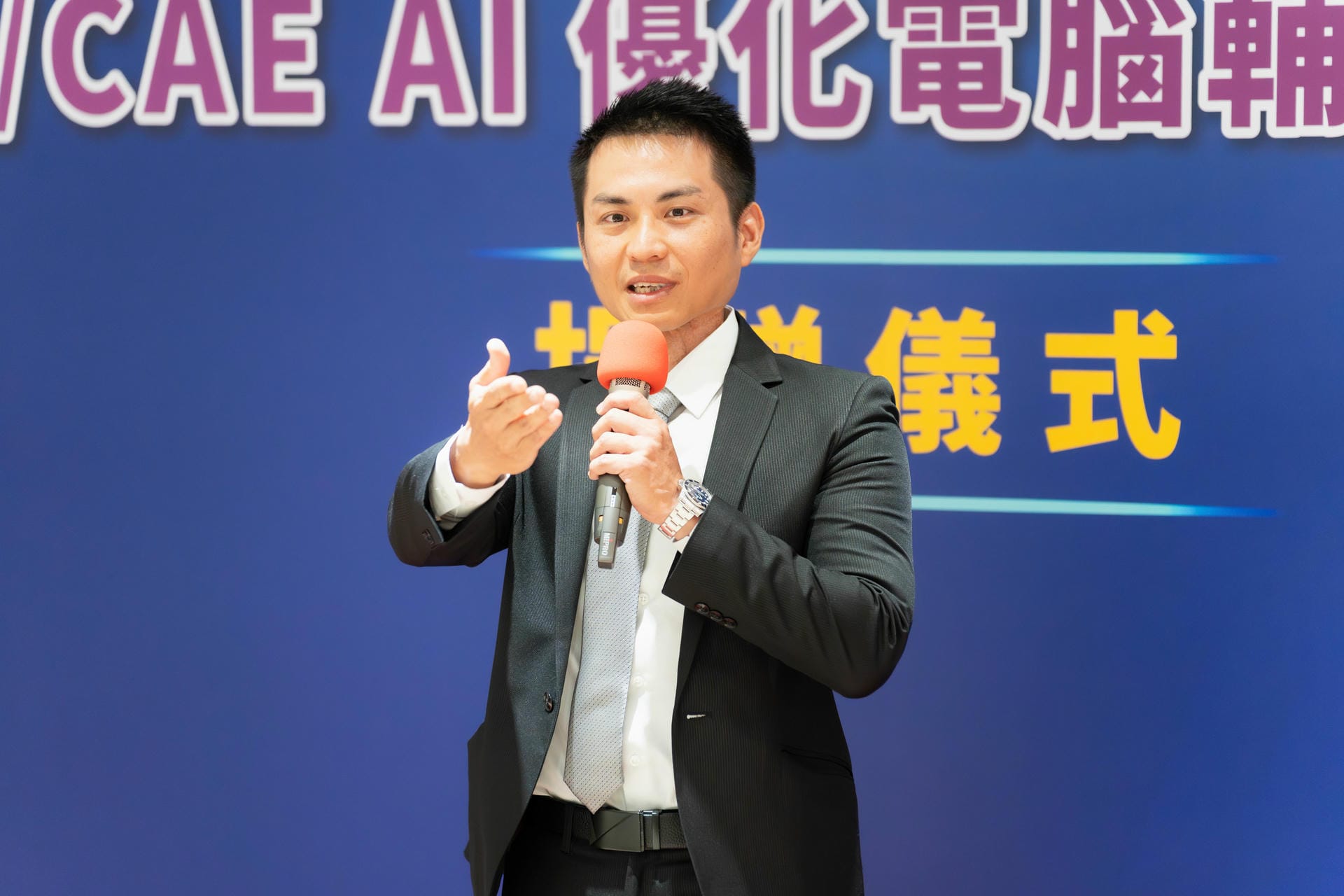
Taylor Lan said that the software will boost students' professional abilities.
Professor Chao-An Lin of the Department of Power Mechanical Engineering said that expensive software usually has to be used in turns, and that this donation of 80 sets each of six professional software packages will greatly improve the efficiency of teaching and research. For example, NTHU Racing has already used the STAR-CCM+ software to optimize the wind resistance of its racecar body, and the same software can also be used for measuring dust levels in a white room.
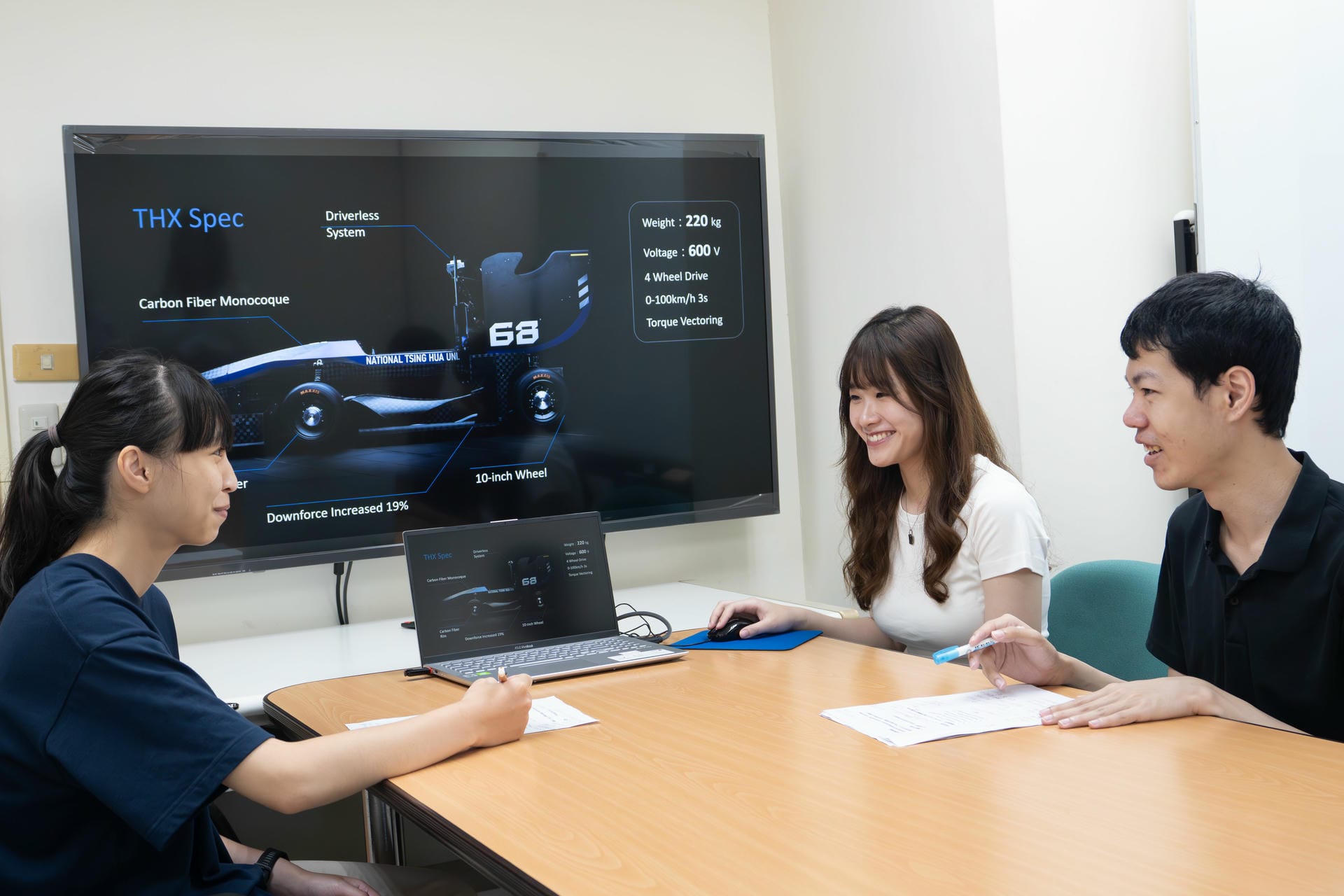
Siemens' software donation will enhance education in engineering analysis and help bridge the gap between theory and practice.
Computing speed has been greatly improved by generative AI, but it has also given rise to the problem of how to dissipate the increased heat levels of servers and chips. NVIDIA CEO Jensen Huang said that “Whoever solves the problem of heat dissipation has got to be a genius.” Lan noted that the donation includes Simcenter Flotherm / FloEFD software, a powerful tool for analyzing heat dissipation. NVIDIA in fact is using this software to conduct heat dissipation analysis for its data center servers and for GPU water cooling analysis. Siemens and Mega Flow also donated NX CAD/CAM product design and intelligent manufacturing software, which has been used by both Apple and Samsung.
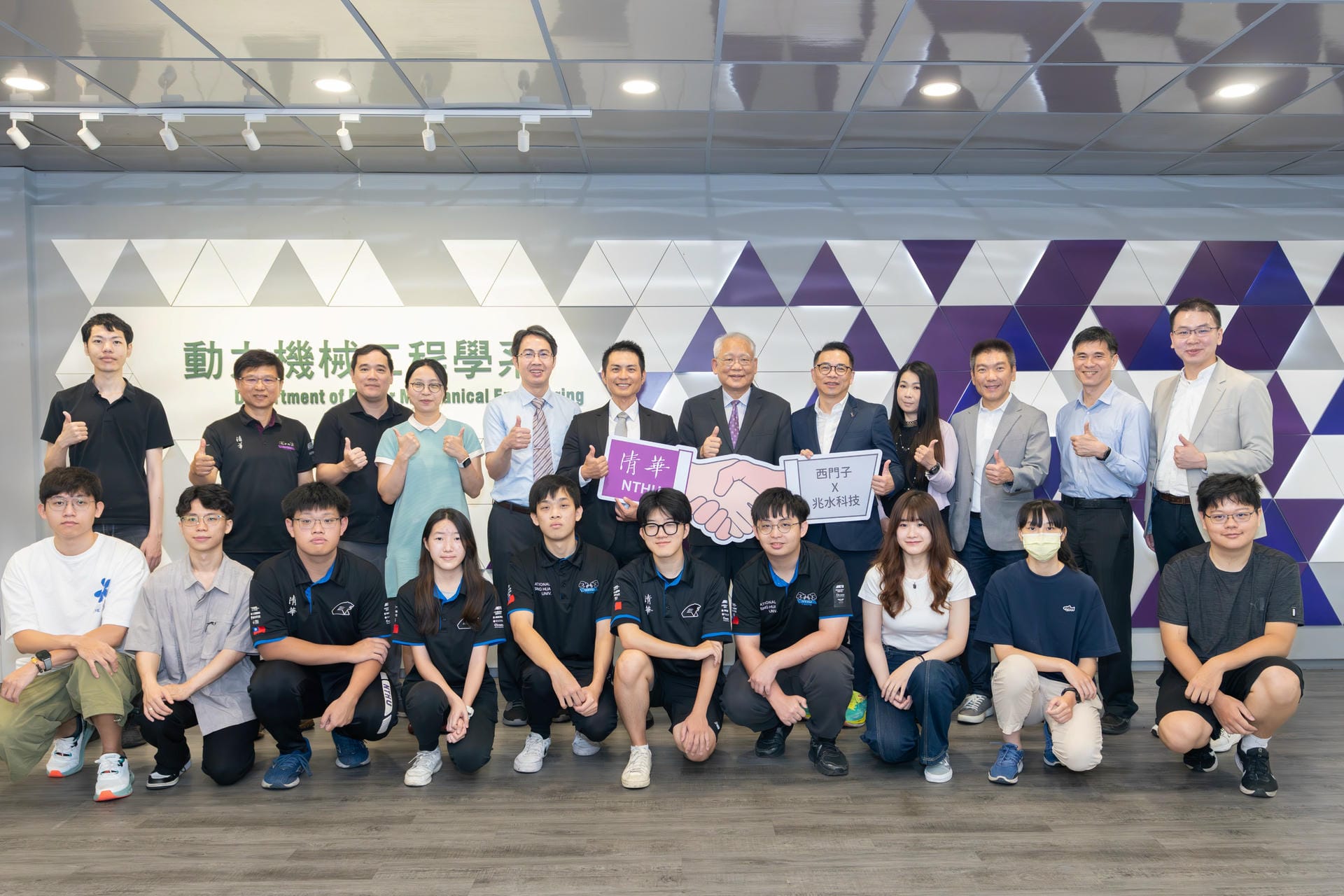
The donated software is valued at NT$160 million and will be used to train the next generation of engineers.
In addition, the donation includes the HEEDS AI engineering optimization platform. Lan said that this software can integrate various types of simulation software used for analyzing structural strength, heat dissipation, vibration noise, and electromagnetism into a single platform, making it possible to use AI algorithms to find the best design solution.
Department of Power Mechanical Engineering director Chih-Yung Huang said that his department is divided into four major areas: energy, electronic control, nano-micro research, and precision machinery and smart manufacturing. He noted that this batch of software covers most teaching and research needs, and that it will help students quickly master the technology used in industry.
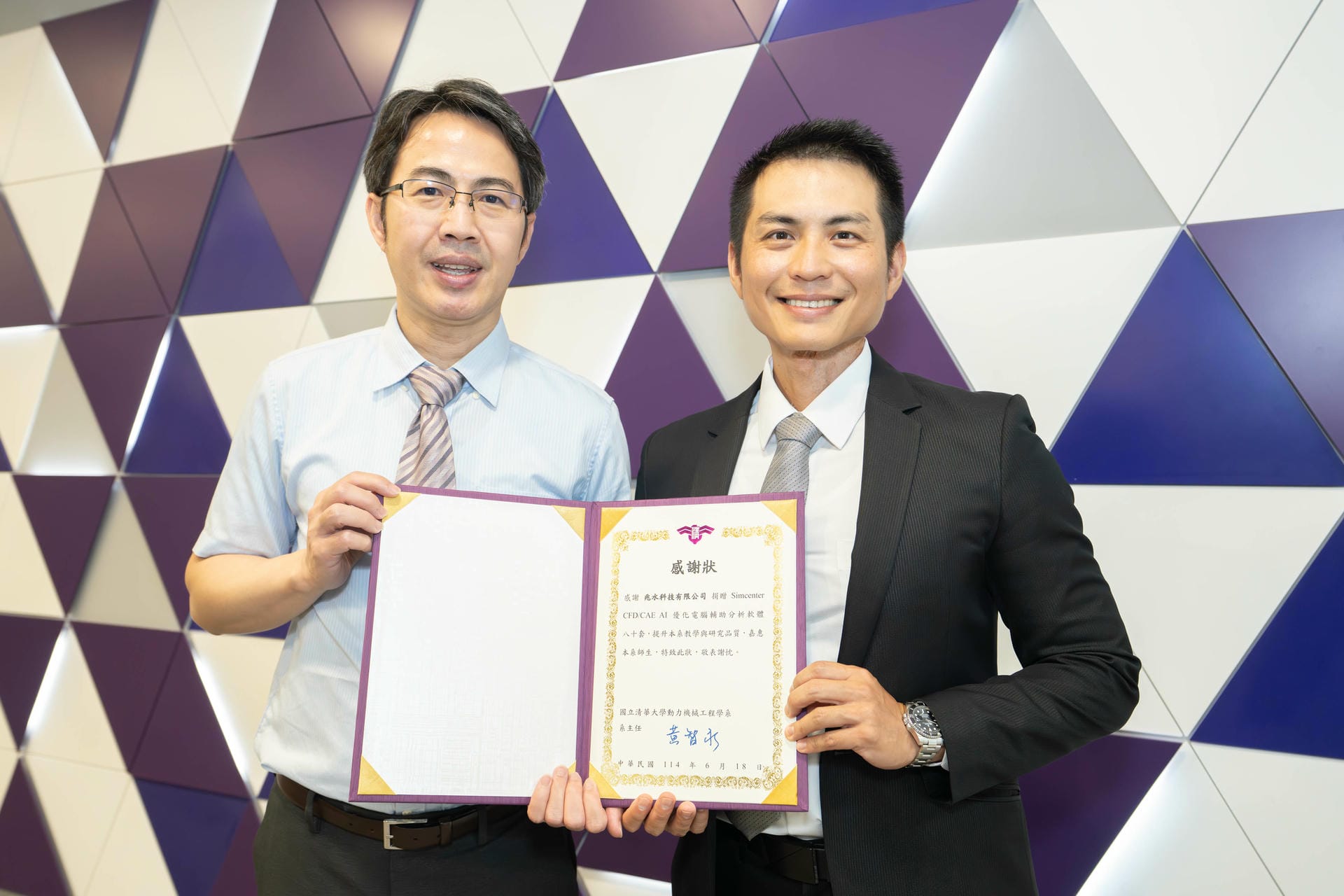
Chih-Yung Huang (left) thanked Taylor Lan for supporting his alma mater.
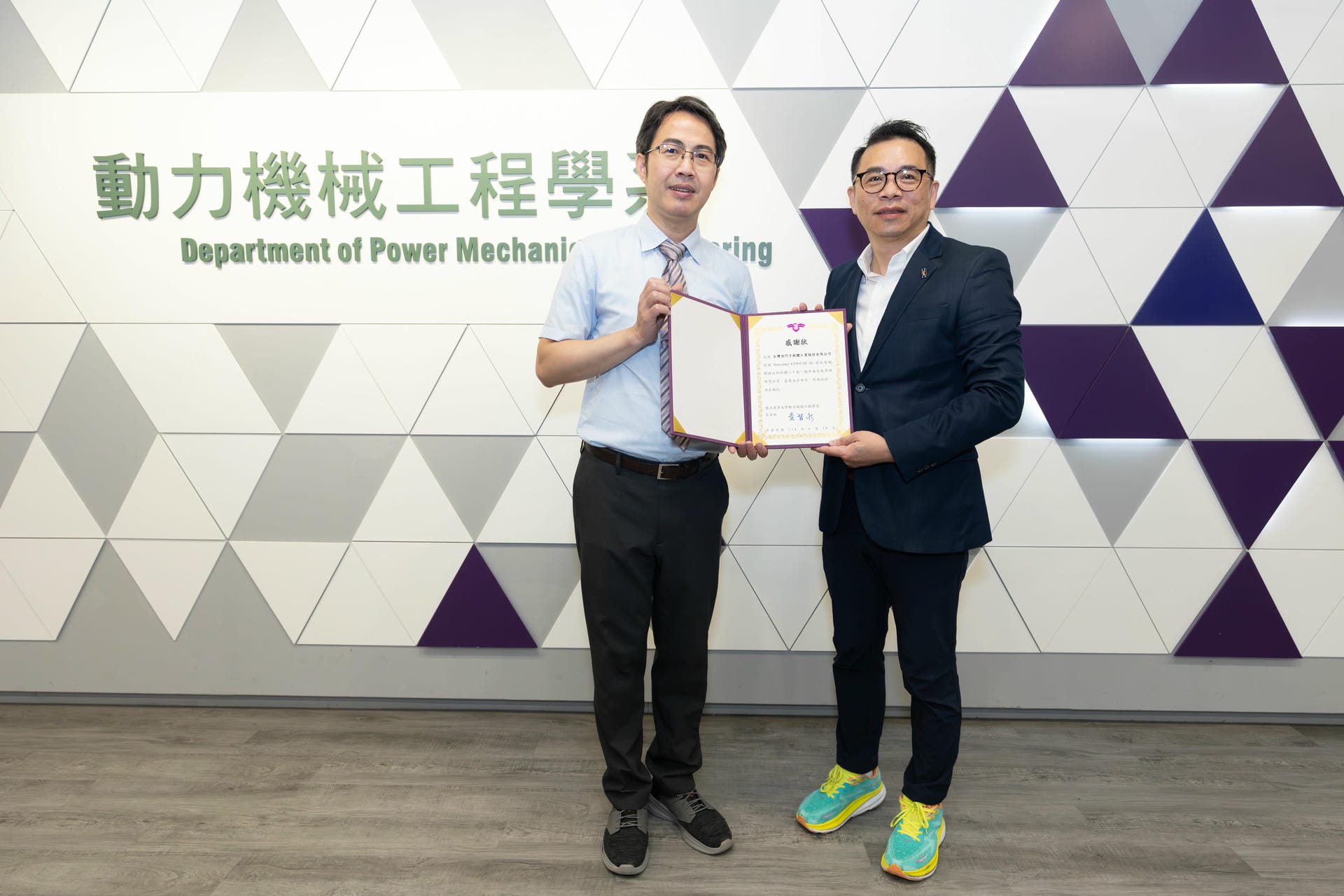
Chih-Yung Huang (left) thanked Howard Chen for supporting his alma mater.
Mega Flow Technology is also assisting the Department of Power Mechanical Engineering with software training, with related courses expected to begin in the second half of this year or the first half of next year. The training will focus on certification, participation in industry-university cooperative projects, and solving real-life engineering problems, thereby helping students lay a foundation for their future careers.
Chen and Lan hope that this donation will encourage more alumni to contribute to the development of their alma mater.